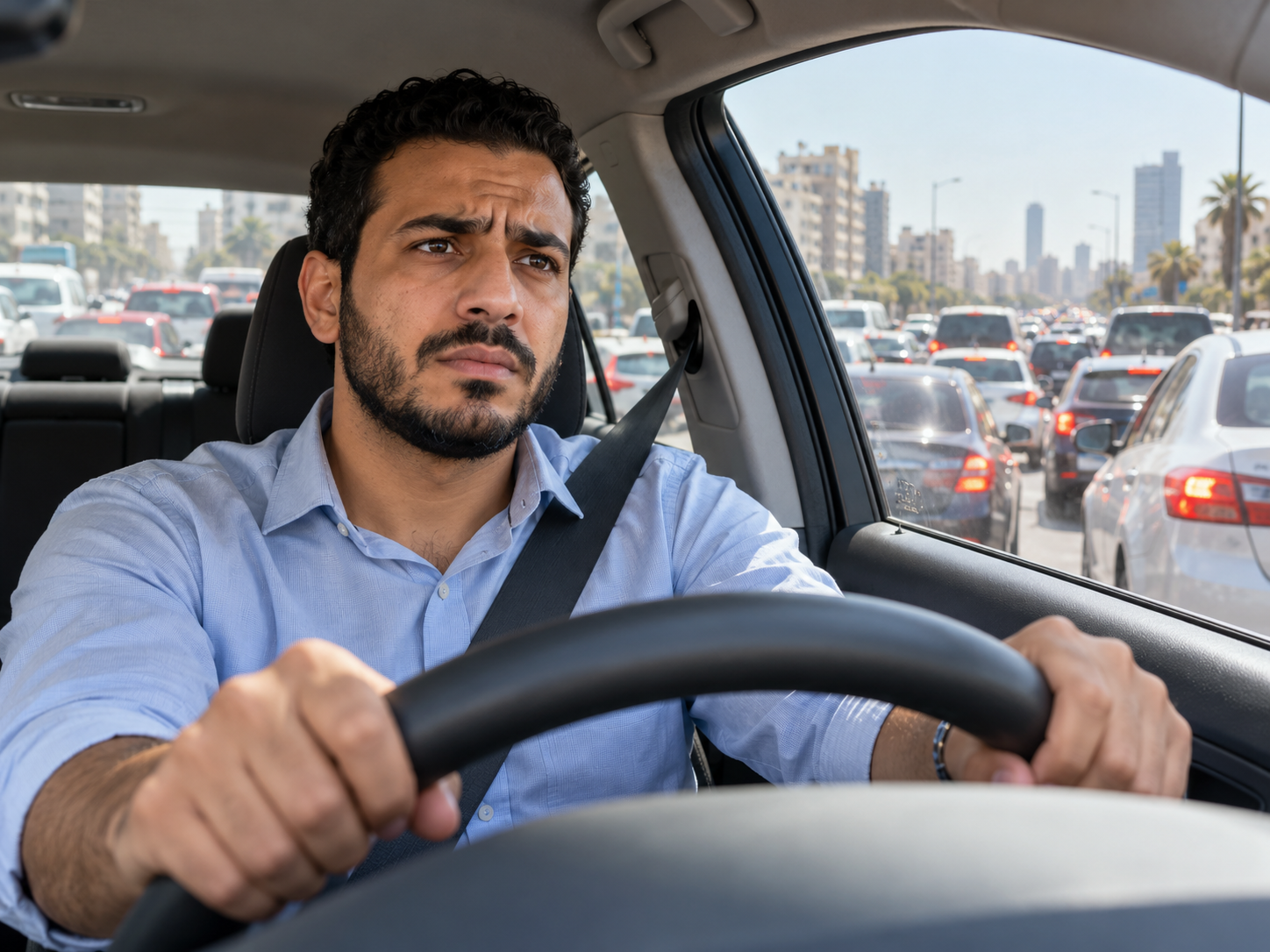


In short: Traffic congestion is more than a delay. For some people, long and unpredictable daily commutes, crowding, noise and lack of control can become repeated sources of stress and irritability. Research has found associations between longer or more stressful commutes and psychological distress in some populations, but traffic alone does not cause a mental health disorder. Practical coping strategies may help reduce how much the journey affects the rest of your day.
You leave home expecting an ordinary commute. Traffic stops. The estimated arrival time keeps increasing. Horns surround you, you have an important meeting, and every driver who moves into your lane suddenly feels personally irritating.
By the time you arrive, the road may be behind you, but the tension can remain.
So why does traffic affect some people so strongly? Can congestion affect mental health? And what can you do when driving anger starts following you into work, home and relationships?
This Mental Care guide explains commuting stress, driving anger, road rage and practical ways to manage traffic-related stress without assuming that every stressful commute represents a psychological disorder.
What is commuting stress?
Commuting stress describes the tension or psychological strain a person may experience while regularly traveling to work, university or other daily commitments.
It does not apply only to people who drive.
Public transport may also become stressful because of:
- Crowding.
- Delays.
- Unpredictable arrival times.
- Noise.
- Long periods of waiting.
- Safety concerns.
- Losing a significant part of the day to travel.
One difficult journey may simply be frustrating. The larger concern is when the same strain is repeated most days.
Can traffic congestion affect mental health?
Research on commuters has found associations between long or stressful journeys and higher psychological distress, stress, anxiety or depressive symptoms in some populations.
However, association is not the same as causation.
Spending time in traffic does not mean that a person will develop a mental health disorder.
Mental health is influenced by many interacting factors, including work, relationships, sleep, physical health, financial circumstances and previous psychological difficulties.
A demanding commute may simply become one additional recurring stressor within that larger picture.
Why can congestion make us feel so stressed?
1. Loss of control
People often cope more easily with problems when they believe they can take action.
In traffic, you may know you are going to be late while having no realistic way to make the road move faster.
That mismatch between urgency and control can increase frustration.
2. Uncertainty
Will the journey take another ten minutes or another forty?
Unpredictability can keep the mind alert and focused on possible problems.
3. Time pressure
When you are trying to reach a meeting, examination, appointment or school pickup, congestion may feel like an obstacle threatening something important.
4. Noise and crowding
Horns, constant movement, crowded roads and sensory stimulation may add to tension, particularly when a person is already stressed.
5. Stress that began before the journey
Sometimes traffic is not the original source of anger.
You may enter the car after a difficult day, poor sleep or an argument.
A small driving incident may then become the final trigger.
Does the traffic end but the stress follow you?
If irritability and stress are becoming a constant part of your day and affecting sleep, work or relationships, talking with a professional may help you understand the wider picture.
Browse Mental Health SpecialistsWhy do I get so angry while driving?
Driving anger can occur for several reasons.
People may interpret another driver's behavior personally:
- “They did that deliberately.”
- “Nobody respects anyone.”
- “I need to teach them a lesson.”
These interpretations can intensify anger even when we do not actually know why another person drove the way they did.
Existing stress, exhaustion, anxiety or frustration can also reduce tolerance for minor setbacks.
What is road rage?
Road rage is a common term used for intense anger or aggressive behavior connected with driving.
It may include:
- Repeated yelling or verbal abuse.
- Aggressive horn use.
- Following another vehicle.
- Deliberately blocking another driver.
- Dangerous retaliatory driving.
- Attempting to confront another driver.
Feeling angry does not automatically indicate a mental health condition.
The concern increases when anger turns into behavior that places you or other people in danger.
What are signs that commuting is draining you?
You may notice:
- Arriving at work exhausted before the day begins.
- Remaining irritable for hours after the commute.
- Worrying about traffic long before leaving.
- Clenching your jaw or shoulders while driving.
- Becoming impatient with family after returning home.
- Feeling that a large part of your life is lost to commuting.
- Avoiding activities because you do not want another journey.
These signs do not diagnose a disorder. They simply help you notice how much psychological load the commute may be adding to your day.
Can traffic cause anxiety?
Traffic may trigger anxiety or tension for some people, particularly when driving is associated with fear of lateness, crowded roads or previous unpleasant experiences.
However, traffic alone does not establish an anxiety disorder.
If anxiety occurs in many areas of life, produces persistent physical symptoms, or causes significant avoidance, a broader assessment may be useful.
You can also read: Psychological and Physical Symptoms of Anxiety
How can a long commute affect the rest of the day?
The psychological cost of commuting may extend beyond the journey itself.
Long travel times can reduce time available for:
- Sleep.
- Exercise or movement.
- Family and relationships.
- Hobbies.
- Recovery after work.
When life becomes work, commuting and sleep with little space in between, emotional exhaustion may gradually increase.
How can I stay calmer in traffic?
1. Leave a time buffer when possible
You cannot control every delay, but allowing more travel time can reduce the feeling that every minute is a crisis.
2. Notice how you interpret other drivers
Instead of: “They are deliberately trying to annoy me.”
Try: “I don't know why they did that. My priority is getting there safely.”
This does not excuse unsafe driving. It simply prevents someone else's behavior from controlling your emotional state.
3. Slow your breathing
If you notice physical tension, allow your breathing to become slower and more comfortable while keeping full attention on the road.
Never use a relaxation exercise that distracts you from driving safely.
4. Reduce unnecessary stimulation
If news, calls or intense audio increase your tension, quieter content or silence may be more helpful.
5. Avoid confrontation
If another driver makes a mistake, safety matters more than proving who was right.
Avoid chasing, retaliatory driving or stopping to confront someone.
6. Give yourself a transition period
After a particularly stressful commute, a few quiet minutes before entering the next demanding situation may help prevent traffic tension from spilling into the rest of your day.
Is the irritability no longer limited to driving?
If stress is now affecting work, home, relationships and sleep, traffic may be only one part of a broader pattern.
Do I Need Therapy?Can music or podcasts help in traffic?
Some people find calm music, an audiobook or a podcast makes commuting less frustrating.
The primary task while driving must still be paying attention to the road.
If audio content makes you distracted or more emotionally activated, it does not need to be part of your coping routine.
What if I use public transport?
Commuting stress is not limited to drivers.
Crowding, delays, multiple connections, standing for long periods and uncertain arrival times can also be stressful.
Where circumstances allow, you might reduce some of this pressure through:
- Having an alternative route.
- Allowing a time buffer.
- Avoiding repeatedly checking the clock.
- Using waiting time for a low-pressure activity.
- Changing travel times or routes when realistic alternatives exist.
Does working from home solve commuting stress?
Reducing commuting can help some people, but working from home is not a universal mental health solution.
Remote work can create other difficulties, including isolation or blurred boundaries between work and personal life.
The better question is which arrangement supports your overall functioning and well-being rather than assuming one model suits everyone.
When does driving anger need professional support?
Consider speaking with a professional if you notice:
- Frequent intense episodes of anger.
- Risky driving when angry.
- Strong urges to retaliate against other drivers.
- Repeated confrontations.
- Difficulty calming down after minor incidents.
- The same irritability appearing at home or work.
- Stress affecting sleep, concentration or daily functioning.
A mental health professional may help you identify triggers, understand the thoughts that intensify anger and develop more effective ways to regulate stress.
Can therapy help with driving anger?
Psychological approaches may help people work on anger and stress through techniques such as relaxation, emotional regulation and examining interpretations that intensify anger.
Seeking help does not automatically mean you have a psychiatric disorder.
Sometimes the goal is simply to develop better ways of responding to a repeated daily stressor.
If you are unsure where to start, read: How to Choose the Right Therapist
Therapist or psychiatrist?
If the main issue is stress, irritability, anger regulation or unhelpful thinking patterns, psychotherapy may be a suitable starting point.
If symptoms are severe or complex, or medical or medication assessment may be needed, a psychiatrist may also be appropriate.
Learn more: Therapist vs Psychiatrist: What's the Difference?
Traffic does not have to control the rest of your day
If stress and irritability are becoming persistent, you can browse Mental Care professionals and choose someone whose experience matches your needs.
Browse SpecialistsFrequently asked questions about traffic stress
Can traffic cause stress?
Traffic congestion and long commutes can be stressful for some people, particularly when journeys are unpredictable or create a feeling of lost control. The effect varies from person to person.
Why do I get angry while driving?
Anger may increase because of delays, lack of control, interpreting other drivers' behavior as intentional, exhaustion, poor sleep or existing life stress.
What is road rage?
Road rage is a common term for intense anger or aggressive behavior while driving. It becomes particularly concerning when it leads to retaliation, dangerous driving or confrontation.
How can I calm down in traffic?
Helpful approaches may include allowing extra time, slowing your breathing without becoming distracted, challenging hostile interpretations and avoiding confrontation or retaliatory driving.
Can commuting cause anxiety or depression?
Some studies have found associations between longer or more stressful commutes and psychological distress, anxiety or depressive symptoms, but this does not prove that commuting alone causes these conditions.
When should I seek help?
Consider professional support when anger or stress becomes severe, frequent, affects driving safety, or begins disrupting sleep, work, relationships or daily functioning.
Read more on Mental Care
- Psychological and Physical Symptoms of Anxiety
- How Do You Know If You Need Therapy?
- How to Choose the Right Therapist
- Therapist vs Psychiatrist
- Browse Mental Care Specialists
Content last updated: October 27, 2026
Safety notice: This article is educational and does not diagnose a mental health condition. If anger, anxiety or stress is severe or persistent and affects your daily life, speak with an appropriately qualified professional. If you feel you may lose control or harm yourself or another person while driving, prioritize safety, stop somewhere safe when possible, and seek appropriate urgent support.


